
How Arrest Warrants Work in Big Stone County
Minnesota judges do not hand out arrest warrants on request. A prosecutor or other authorized applicant files a complaint first. That complaint, with sworn facts behind it, must establish probable cause before a judge signs anything. Even then, the rule prefers a summons over a warrant in Big Stone County and everywhere else in the state. A warrant issues only when circumstances support one, such as a real chance the person will not respond, an unknown location, or a need to stop imminent harm. Two people facing similar charges can end up with very different paperwork for that reason. The rule governing issuance is published at revisor.mn.gov/court_rules/cr/id/3, and that official page sets out each requirement in full.
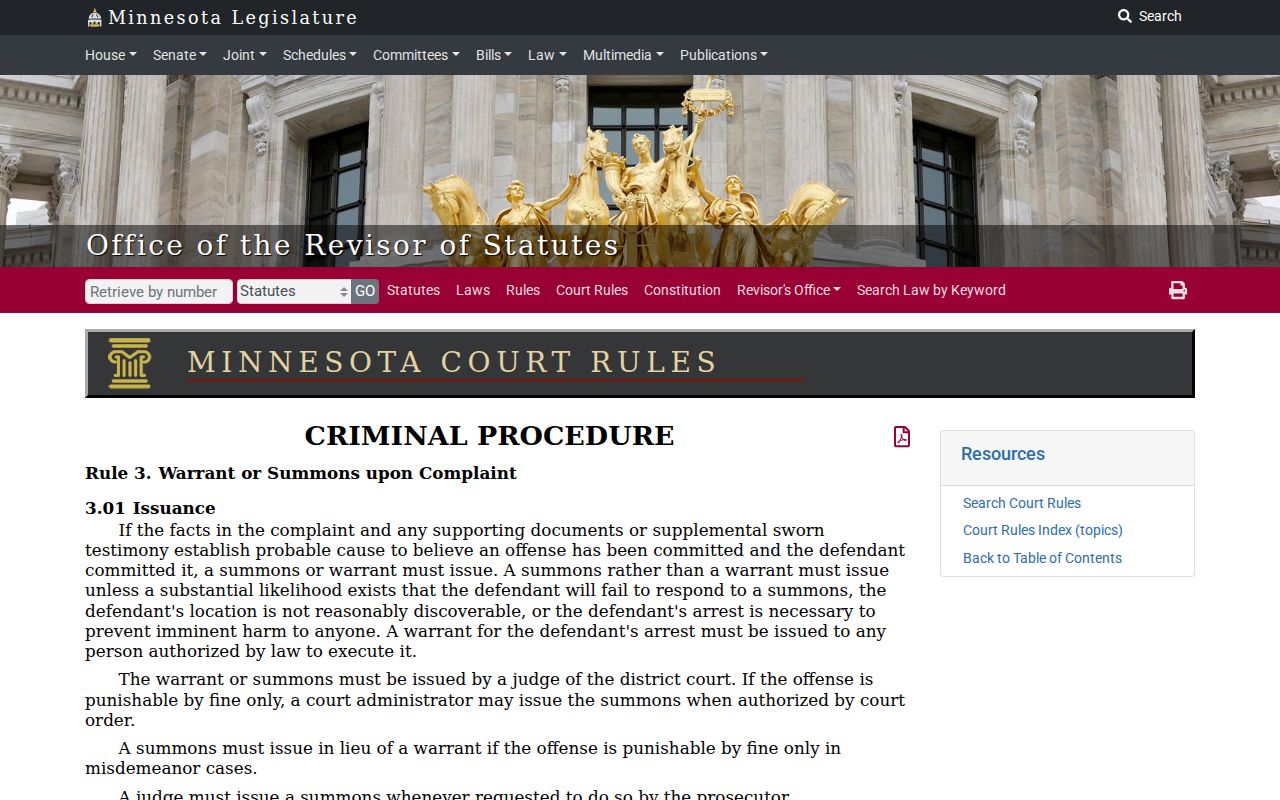
Probable cause is only the threshold for issuing process in Big Stone County. It decides whether a case moves forward, not whether anyone committed a crime.
Big Stone County Complaint to Appearance
The sequence in Big Stone County is short. A complaint lands in district court with supporting facts. A judge reads it and picks a summons or a warrant. The signed order goes to an authorized officer and into the criminal justice systems officers use. After an arrest, the court reviews probable cause and sets release, bail, and the next date. Each step leaves a different record. Only part of it reaches the public, so knowing the order of events tells you which office to ask next.
Arrest Warrants: What They Contain
Minnesota publishes a blank warrant form in its criminal procedure appendix. The field list shows what a signed order carries. A Big Stone County case record shows fewer fields than the document holds.
| Court and District | The court that issued the order and the judicial district it sits in. |
|---|---|
| Case Number | The court identifier, for example CR-26-000412. |
| Named Subject | The person the order directs officers to take into custody. |
| Offense | The charge described in the complaint, with the supporting probable cause statement. |
| Release Conditions and Bail | Terms or an amount set by the judge, where the court has set them. |
| Issuing Officer and Date | The judicial officer who signed the order and the date it was issued. |
Big Stone County Warrants Are Not Convictions
An order to arrest is a step in a Big Stone County case, not the result of one. A case category on a public screen only says how the matter is classified. It says nothing about what happened later. Charges get dismissed, reduced, or resolved through a plea. A warrant gets recalled or served along the way. An open order still carries real consequences while it stands, but the file alone never settles guilt. For what actually occurred, read the register of actions. Ask the court about anything unclear.
How Warrants Get Served in Big Stone County
For service and surrender questions in Big Stone County, the Sheriff's Office is the first call, and authorized peace officers may execute process as directed. The county posts no warrant unit chart, no after-hours surrender procedure, and no receiving jail. A 2024 state study of regional jails reports that Big Stone County has no jail facility, and no office names the facility that receives county arrests. So call before any trip. Ask where a person is taken, where bail is posted, and what identification is required. The rule covering arrest, prompt review, and release is published at revisor.mn.gov/court_rules/cr/id/4.
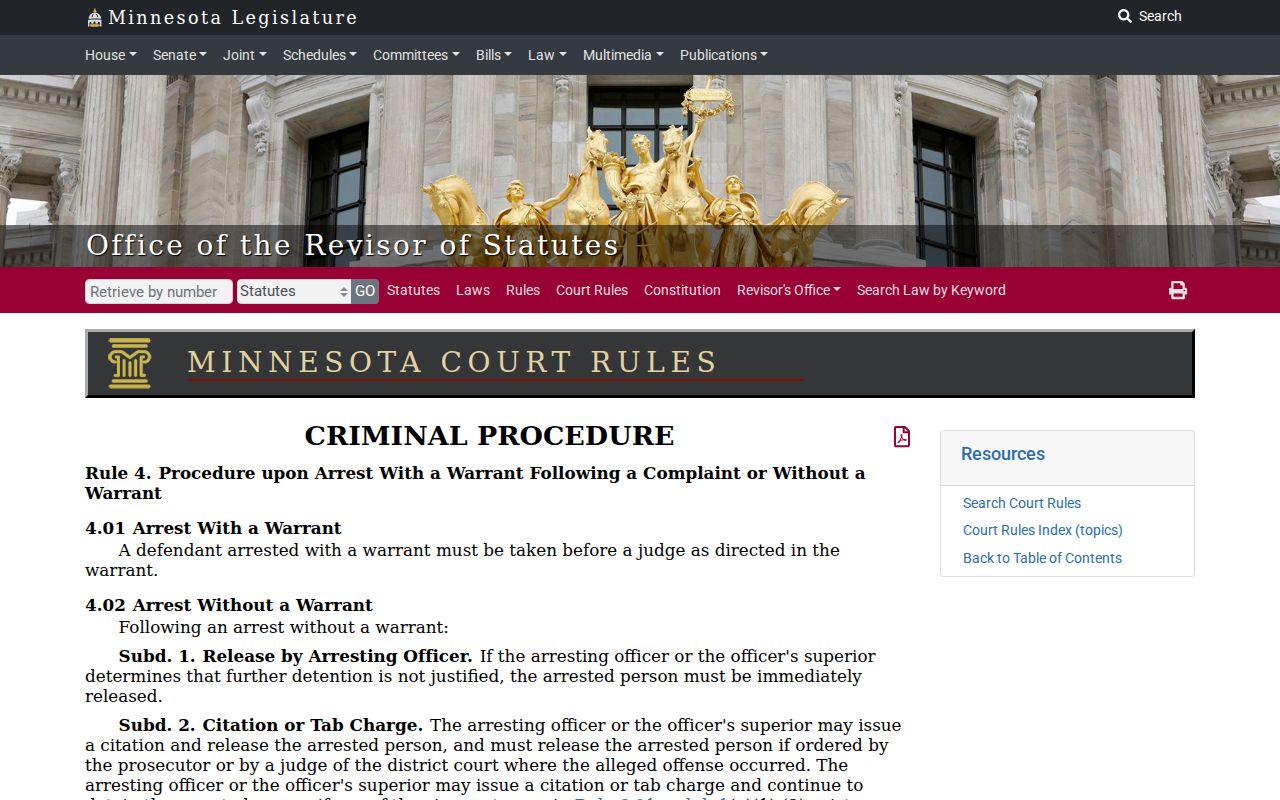
A judge decides release and bail in Big Stone County. The county has to tell you where those steps happen.
Big Stone County Federal Warrants Differ
A federal warrant is not a Big Stone County District Court warrant, even when the person lives in the county. Federal cases run on federal case numbers, dockets, and federal enforcement. Big Stone County sits inside the District of Minnesota. The United States Marshals Service covers the county. The North Star Fugitive Task Force is a federal-led partnership that can adopt state and local warrants. Federal arrest warrants may stay sealed until executed, so an empty docket search proves nothing. The western Minnesota federal courthouse sits in Fergus Falls. The federal court lists its locations and contacts at mnd.uscourts.gov, and the district Marshals office is described at usmarshals.gov.
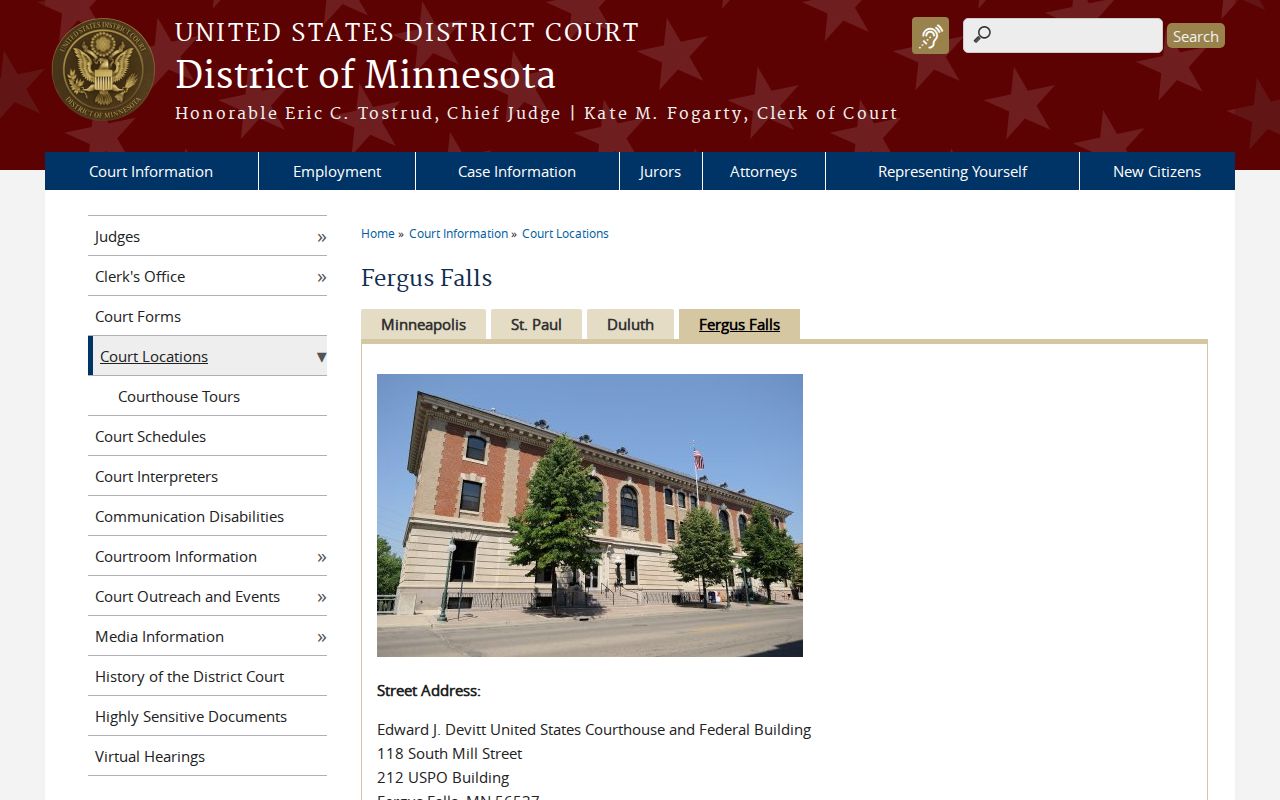
A county case never routes a federal matter. Nothing about a federal matter reaches the Big Stone County payment systems.
Arrest Warrants, Summonses, and Bench Warrants
Three instruments, three starting points in Big Stone County. The table separates them by what each one orders and how a person responds.
| Feature | Arrest Warrant | Summons | Bench Warrant |
|---|---|---|---|
| What It Orders | Custody under the terms of the order. | An appearance on a set date. | Custody for a missed obligation. |
| Basis | Probable cause of an offense. | A charge that does not require custody. | A missed appearance or broken condition. |
| Who Issues It | A judge reviewing the complaint. | The court at charging. | The judge handling the existing case. |
| How to Respond | Counsel, surrender, bond, appearance. | Show up on the date. | Appear, reset, or move to recall. |
The missed-court side of that comparison is covered in depth on Big Stone County bench warrant lookup.
If You Learn About an Order From a Call
Unsolicited calls, texts, and emails about warrants are a common scam, and they work because the subject is frightening. Treat any message with a payment link, a phone number, or a deadline as unverified until you confirm it through a number you looked up yourself. Do not send money to anyone offering to remove an order. Use the court's own case search with the case number. Then call Court Administration and the Sheriff's Office in Big Stone County. If a real order exists, only the court can recall it. Only a licensed lawyer can advise you on it.
Handling an Arrest Warrant in Your Name
Facing a warrant in your own name in Big Stone County, you have three lawful paths: voluntary surrender, posting bond, or a motion to recall or quash. All three run through the issuing court. A lawyer makes each one easier to plan. Confirm the case number and the charge first. Then choose how and when you appear, rather than letting a traffic stop decide for you. Court staff can explain procedure and access, though they cannot give legal advice.
Important: Talk to a lawyer before turning yourself in, because an open arrest warrant can lead to custody at any contact with law enforcement.
Who Requests a Big Stone County Warrant
Who is behind a Big Stone County warrant? A prosecutor, or another authorized applicant, files the complaint. A district court judge then chooses between a summons and a warrant. City police can be part of the original investigation. The Ortonville Police Department lists a station contact, but the city runs no separate warrant portal. Federal matters belong to federal prosecutors and a federal court. The issuing court and the office that filed the case are the real answer.
- Filing office: the county attorney or another authorized applicant.
- Issuing authority: a Big Stone County District Court judge.
- Executing agency: the Sheriff's Office or another authorized peace officer.
- Records question: Big Stone County Court Administration.